ServicesTrailer Interchange Insurance
Trailer Interchange Insurance in Marietta, GA
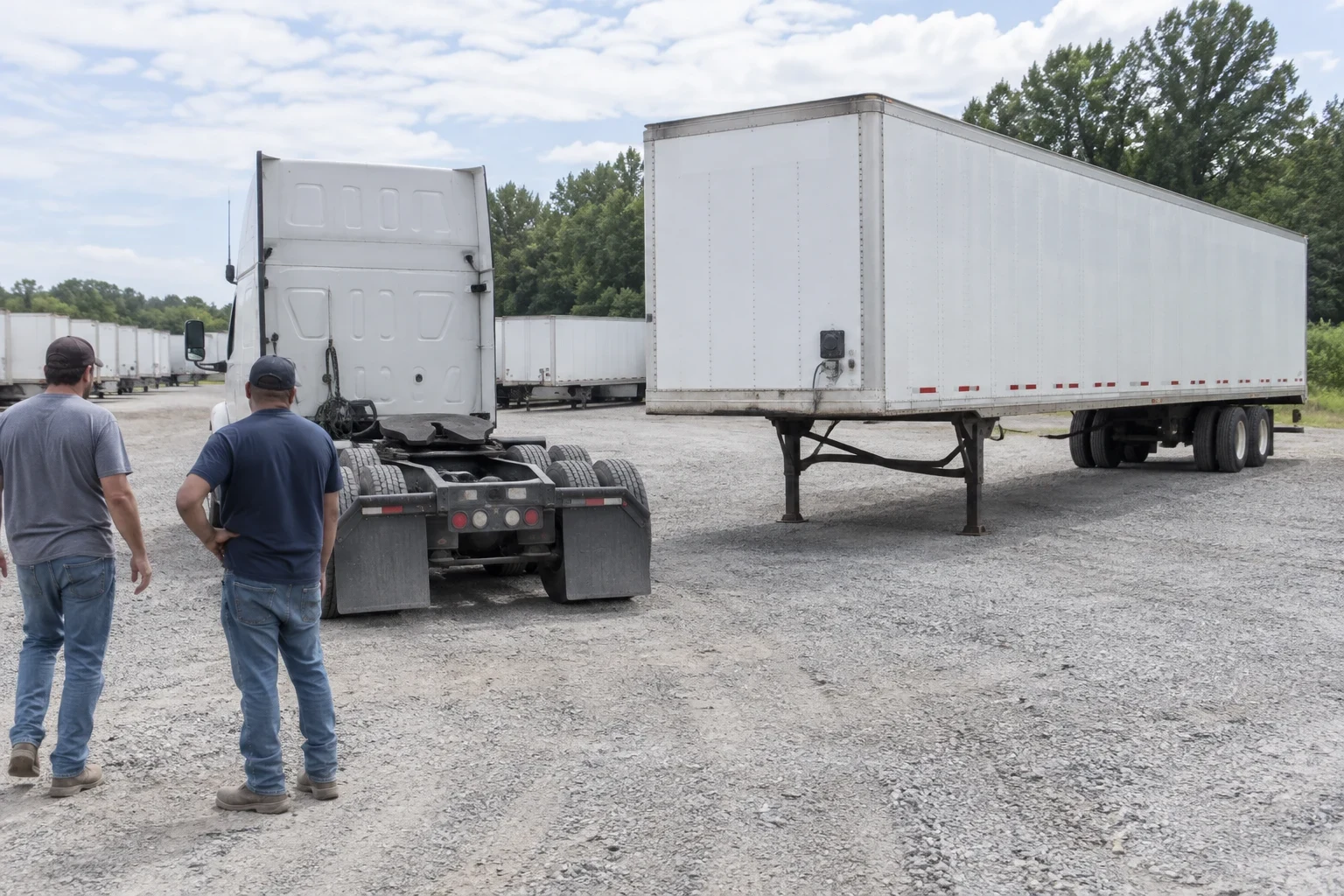
When you sign an interchange agreement, the trailer becomes your responsibility the moment it's hooked up. We write trailer interchange insurance that matches the agreement line by line, so a damaged or stolen trailer is covered and the owner gets paid.
What trailer interchange coverage does
Trailer interchange insurance pays for physical damage to a trailer you don't own while it's in your possession under a written interchange agreement. Collision, fire, theft and similar losses are the usual perils. It sits alongside your physical damage coverage, which normally protects only the equipment you own.
The coverage only works as well as its fit with the contract. Agreements spell out a minimum limit, who carries the deductible, whether loss-of-use charges apply and how the certificate of insurance must read. We read those details before we quote, because a mismatch in any one of them can leave you paying the trailer owner out of pocket.
Most of the motor carriers who ask us about it run drayage, intermodal or power-only freight around metro Atlanta, where swapping trailers is part of a normal week.
What we look after when we set it up
A reading of your agreement
We go through the interchange agreement you've signed or are about to sign, including the UIIA if you pull containers and chassis. We note the required limit, deductible terms and any wording the certificate must carry.
Limits sized to real trailers
A dry van, a reefer and a flatbed carry very different replacement values. We set the per-trailer limit to the most valuable unit you're likely to pull, not a round number that looks fine on paper.
Loss-of-use attention
Some agreements let the owner bill you daily while a damaged trailer sits in the shop. We check whether that charge is in your contract and whether the policy responds to it.
Certificate wording done right
We prepare the certificate of insurance with the coverage, limit and exact phrasing the trailer owner's agreement calls for. A rejected certificate can hold up a load, so we check each line against the contract before it goes out.
Fit with the rest of your policy
We look at how interchange coverage sits next to your primary auto liability, physical damage and motor truck cargo so there are no gaps or doubled-up premiums.
Signs you need trailer interchange coverage
You've been handed an interchange agreement
If a carrier, railroad or leasing company wants your signature before you take their trailer, the contract almost always requires proof of this coverage.
You pull containers or chassis
Intermodal and drayage work usually runs under the UIIA, and access to the yards depends on having the right coverage on file.
Your work is power-only
Hauling other people's trailers is the whole business model here, which makes every trailer a potential claim against you.
A certificate request mentions it by name
When a broker or shipper asks for trailer interchange on your certificate, your current policy may not include it.
Your physical damage lists only your own units
Owned-equipment coverage rarely reaches a trailer you borrowed. If yours stops at your VINs, the borrowed trailer is uncovered.
How we put the coverage together
- 1
A conversation by phone or video
We talk through the freight you haul, the trailers you swap and who owns them. You can also sit down with us at our office.
- 2
We read the paperwork
Send over the interchange agreement and your current declarations page. We mark every requirement and anything that conflicts with what you carry now.
- 3
A quote you can follow
We lay out the limit, deductible and premium plainly, and explain any choice that changes the cost so you decide with the full picture.
- 4
Certificates and filings
Once you bind, we issue the certificate of insurance to the trailer owner and update any carrier records that need it.
What moves the price
Trailer interchange is usually a modest part of a trucking policy, but the premium still rests on a handful of specifics. We show you which ones apply to your operation and where a different choice would change the number.
- The limit per trailer
- Higher-value trailers need a higher limit, and the premium follows. Reefer units and specialized equipment cost more to cover than a standard dry van.
- Your deductible
- A larger deductible lowers the premium, but only if the agreement allows it and you're comfortable covering that amount after a loss.
- Loss history and driving records
- Past trailer damage claims and the records of the drivers who will hook up borrowed equipment both weigh on the rate.
- How you run
- Radius, the type of freight and how often trailers change hands all affect how carriers price the risk.
Trailer interchange questions
Something not covered here? (770) 762-4540
How is this different from non-owned trailer coverage?
Trailer interchange applies when there's a written interchange agreement making you responsible for the trailer. Non-owned trailer physical damage is for borrowed trailers without that kind of contract. We look at how you actually get your trailers and recommend the one that fits, or both if your work mixes the two.
Does it cover the freight inside the trailer?
No. Trailer interchange covers the trailer itself. The load is protected by motor truck cargo insurance, which we can quote at the same time so the two line up.
Is trailer interchange required by law?
It isn't a federal filing like liability for your MC authority. The requirement comes from the contract. If you sign an interchange agreement, the trailer owner can insist on it, and you're bound by those terms either way.
Can it be added to the policy I already have?
Often it can, as an endorsement. We'll review your current policy first and tell you whether adding it there or placing it differently gives you better terms.
I'm leased onto a carrier. Doesn't their policy cover the trailer?
Sometimes it does, sometimes it stops at their own equipment. Ask for the carrier's certificate and lease terms, and we'll read them with you. We've spent five years in business helping drivers sort out exactly this kind of question before a claim forces it.
Get the agreement and the policy saying the same thing
Have your interchange agreement handy and we'll walk through it with you. You'll get your quote by phone, with the limit and wording explained.