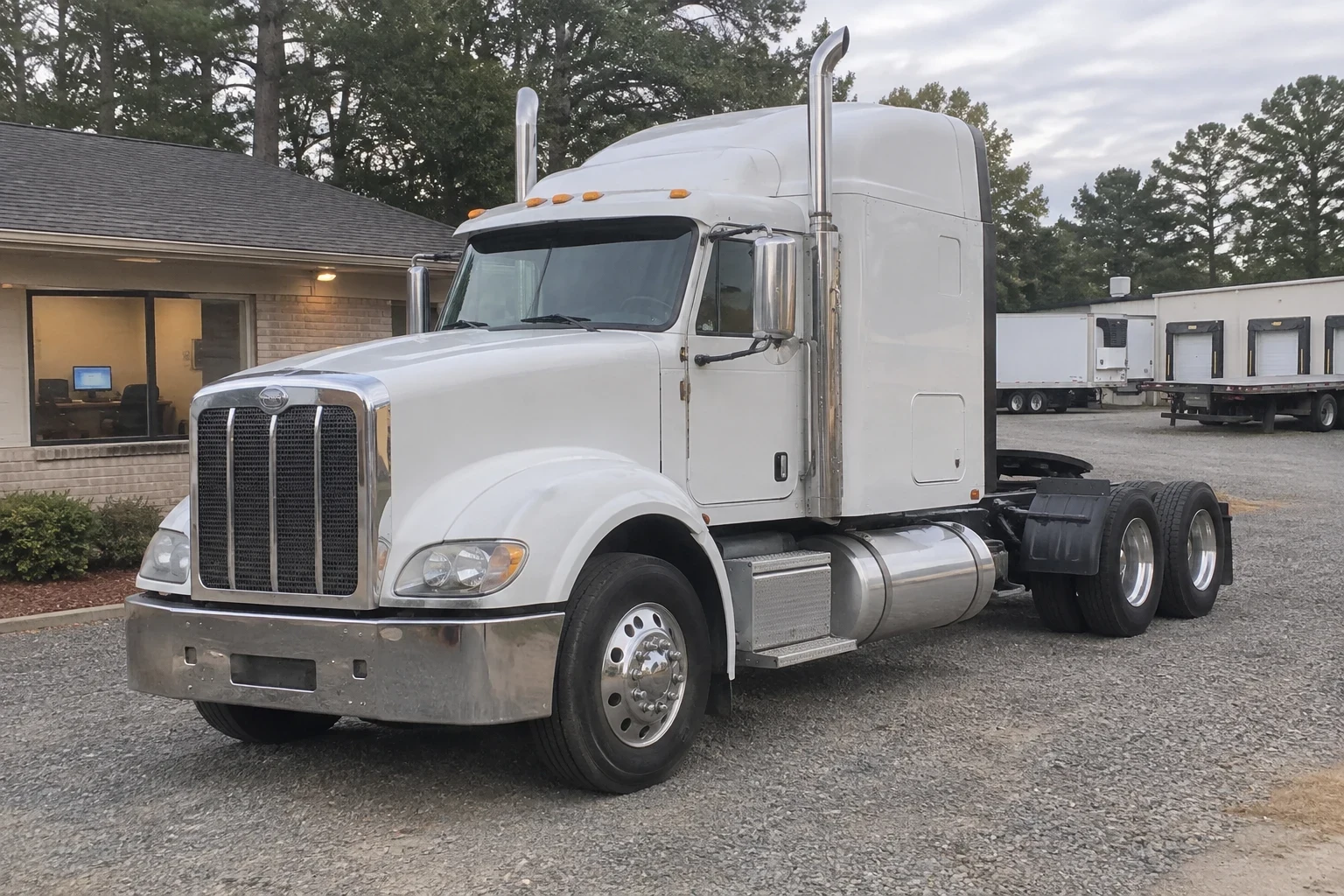
What Is the Difference Between Bobtail Insurance and Non-Trucking Liability for Marietta Owner-Operators?
Two names, one gap in coverage, and a few lines of policy wording that decide whether a claim gets paid.
What is the difference between bobtail insurance and non-trucking liability insurance?
Bobtail insurance and non-trucking liability both cover a leased owner-operator's truck outside the motor carrier's policy, but they are triggered differently. Classic bobtail coverage applies when the tractor runs without a trailer. Non-trucking liability applies when you are off dispatch, with or without a trailer, and not working for anyone. Many insurers now use the names interchangeably.
Why the two names get mixed up
When you lease your truck onto a motor carrier, the carrier's primary auto liability covers you while you haul under its DOT number and MC authority. Once the load is delivered and you are off the clock, that coverage usually stops. Something has to fill the space between the end of one dispatch and the start of the next.
Years ago the industry called that filler bobtail insurance, because the typical off-duty trip was a tractor with no trailer behind it. As policies were rewritten, many insurers moved to the term non-trucking liability, which ties coverage to what you are doing rather than what is hitched to the fifth wheel. Drivers, dispatchers and even some agents still use both terms for the same product, which is why the question comes up so often.
What actually triggers each one
The cleanest way to see the difference is to look at the condition that turns coverage on. A true bobtail policy cares about the trailer. A non-trucking liability policy cares about dispatch and business use.
That difference matters in ordinary weeks. Here is how a few common trips usually line up, though your own policy wording is what counts.
- Driving the tractor alone to a truck stop for dinner on a day off: usually covered under either form.
- Pulling an empty trailer to your yard over the weekend with no load assigned: often covered under non-trucking liability, but may fall outside a strict bobtail policy because a trailer is attached.
- Bobtailing to a shipper to hook a loaded trailer: usually not covered by either, since you are under dispatch and the carrier's primary liability should respond.
- Taking the truck to a shop for routine service on your own time: commonly treated as non-business use, but some policies read maintenance trips differently.
The policy wording that decides a claim
Most disputes over these policies are not about the premium or the limit. They come down to a handful of definitions printed deep in the form, and the way those definitions meet the language in your lease agreement. We read those lines closely before anything is bound, because that is where coverage holds or gives way.
The phrase to watch is the business-use exclusion. If the policy excludes any trip made "in the business of" anyone, a deadhead run back toward the terminal after a delivery can be argued either way. Some forms define dispatch precisely; others leave it open. A policy that matches how you actually run, and how your carrier logs your status, is worth far more than one that simply carries the right name on the declarations page.
- How the policy defines business use and dispatch
- Whether a trailer, loaded or empty, changes coverage
- How deadheading and return trips are treated
- Whether your motor carrier needs to be named on the policy or shown as a certificate holder
Which one your lease is really asking for
Most lease agreements spell out what the carrier expects you to carry, and many now name non-trucking liability specifically along with a minimum limit. If the lease says bobtail, it is worth asking the carrier's safety or contracts office what they mean, since some use the old term out of habit. Your certificate of insurance has to show the coverage the carrier asked for, or you may be held off the road until it does.
Neither policy covers damage to your own truck. That is physical damage insurance, a separate coverage that pays to repair or replace the tractor. And if you leave a lease to run under your own MC authority, non-trucking liability no longer fits at all. At that point you need primary auto liability and the federal filings that go with it, which we cover under owner-operator truck insurance and new authority truck insurance.
For drivers who keep their trucks parked around Marietta and Kennesaw between runs, the off-duty miles are often short local trips. Short does not mean uncovered, so the same wording check applies to a run to the parts store as to a long weekend drive.
More questions from leased owner-operators
- Does non-trucking liability cover my cargo?
- No. It is liability coverage for injury and damage you cause to others while off dispatch. Freight is protected under motor truck cargo insurance, which is usually arranged through the carrier or as its own policy.
- Can I carry both bobtail and non-trucking liability?
- In most cases there is no reason to. Modern non-trucking liability forms generally include bobtail situations, so stacking the two adds premium without adding real protection. The better step is making sure the one policy you carry reads the way you drive.
- What happens if I switch to a different carrier?
- Your policy may stay in place, but the new lease could ask for a different limit or a new certificate holder. Let us know before the switch so the certificate of insurance is updated and the new carrier has it on day one.
- Does my carrier's insurance ever cover me off dispatch?
- Usually not, though some carriers write policies that extend to certain off-duty use. Ask for the carrier's coverage summary in writing and we can compare it against your lease.
Have your lease and policy read side by side
Bring your lease agreement and current declarations page to the call. We will go through the definitions of dispatch and business use with you, point out where the wording leaves a gap, and give you a quote by phone for non-trucking liability that fits how you actually run.